For the fourth time in 2026, Philippine and American military forces joined together for a bilateral maritime exercise in the West Philippine Sea, wrapping up six days of intensive drills that tested interoperability across naval, air, and marine domains. The activity, running from June 14 to 19, 2026, drew a wide range of assets from both nations and further cemented what officials described as a deepening security partnership in the Indo-Pacific.
Official Announcement from Camp Aguinaldo
Col. Xerxes A. Trinidad, Chief of the AFP Public Affairs Office, issued an official statement from Camp Aguinaldo in Quezon City on Saturday, June 20, 2026, confirming the successful conclusion of the Bilateral Maritime Cooperative Activity (MCA) between the Armed Forces of the Philippines (AFP) and the United States Indo-Pacific Command (USINDOPACOM).
According to the AFP Public Affairs Office, the MCA format differs from larger, more publicly visible exercises like Balikatan in that it is designed to be a more focused, operationally targeted bilateral engagement — one aimed at sharpening specific maritime capabilities rather than demonstrating broad alliance strength.
Philippine Assets Committed to the Exercise
The Philippine side deployed a significant combination of naval and air platforms for the six-day activity. The BRP Diego Silang (FFG7), a guided-missile frigate, served as one of the primary surface vessels during the exercise. Air assets contributed by the AFP included the AW109 helicopter, the FA-50 fighter aircraft, the C-208B aircraft, and Sokol helicopters.
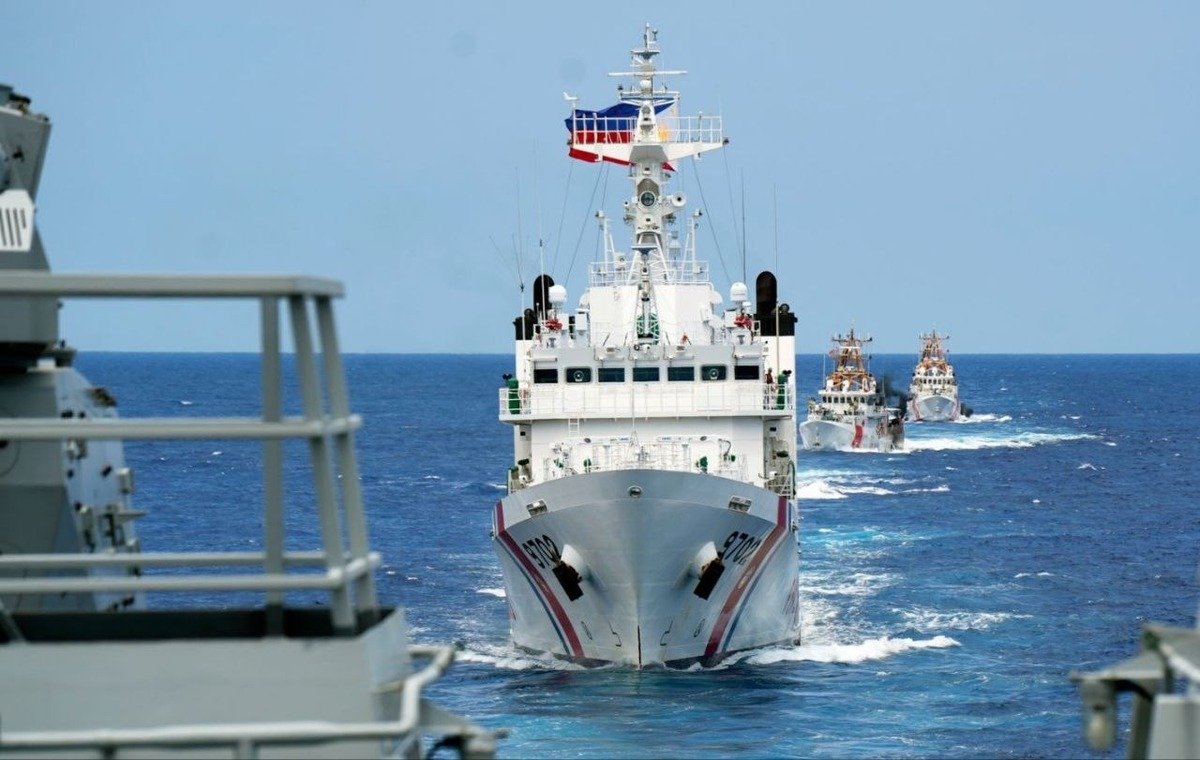
Notably, the Philippine Coast Guard also took part, contributing two Multi-Role Response Vessels: the BRP Melchora Aquino (MRRV 9702) and the BRP Sindangan (MRRV 4407). The AFP noted that the inclusion of Coast Guard vessels reflects a growing trend toward integrating civilian maritime law enforcement agencies into joint defense and interoperability operations alongside the Philippine Navy.
Both MRRVs were acquired as part of the Coast Guard’s fleet modernization program and are equipped for a wide range of tasks including search and rescue, maritime patrol, law enforcement at sea, and humanitarian assistance. Their participation alongside naval frigates and military aircraft signals that the Philippines is moving toward a whole-of-government approach to maritime security.
US Forces and Platforms Deployed
On the American side, USINDOPACOM committed an equally capable and diverse set of platforms. According to the AFP’s official statement, the United States deployed two fast-response cutters operated by the United States Coast Guard: the USCGC Charles Moulthrope (WPC 1141) and the USCGC Emlen Tunnell (WPC 1145).
A P-8A Poseidon maritime patrol aircraft — a long-range platform capable of anti-submarine warfare and wide-area maritime surveillance — was also fielded during the exercise. The 3rd Marine Littoral Regiment, a relatively new US military formation specifically designed for distributed operations in contested coastal and island environments, also participated. Its involvement is particularly relevant given the strategic geography of the Philippine archipelago.
Exercises Conducted Over Six Days
Over the course of the drill, forces from both countries carried out a wide array of maritime interoperability activities. These included Search and Rescue (SAR) operations designed to improve joint response to maritime emergencies, and Visit, Board, Search, and Seizure (VBSS) exercises, which sharpen the ability of both forces to enforce maritime law and interdict illegal activity at sea.
Communication Exercises (COMMEX) were conducted to ensure smooth information flow and coordination between Filipino and American units. Division Tactics and Officer of the Watch (DIVTACS/OOW) drills tested formation sailing and multi-vessel tactical ship-handling under realistic conditions.
A Photo Exercise (PHOTEX) was also held to document and evaluate fleet formations, while a Joint Fires Rehearsal — among the more operationally significant components of the MCA — trained units on the coordinated use of firepower across multiple domains in support of combined arms operations.
Fourth MCA of 2026 Reflects Elevated Operational Tempo
The AFP Public Affairs Office confirmed that the June exercise was the fourth Bilateral MCA between the Philippines and the United States conducted within 2026 alone. This sustained frequency points to a deliberate elevation in the pace of maritime security cooperation between Manila and Washington.
The West Philippine Sea — the designation used by the Philippines to refer to the portions of the South China Sea falling within the country’s exclusive economic zone under international law — has remained a persistent source of regional tension due to competing maritime claims. The frequency of joint exercises in the area underscores both nations’ interest in maintaining maritime domain awareness and readiness in the zone.
AFP Reaffirms Commitment to Rules-Based Order
In the statement released by Col. Trinidad, the AFP described the exercise as demonstrating “the enduring commitment of the Philippines and the United States to strengthen maritime cooperation, enhance maritime domain awareness, and reaffirm support for a rules-based international order in the Indo-Pacific region.”
This language aligns closely with the broader strategic framework that both Manila and Washington have consistently used to describe their bilateral alliance, particularly in discussions around freedom of navigation, overflight rights, and the defense of sovereign maritime territories. Maritime domain awareness — which encompasses the monitoring and understanding of all activities occurring on, under, and above the sea — has been identified by the AFP as a core modernization priority as the Philippines works to strengthen its capacity to defend its maritime interests.
Alliance Rooted in MDT, VFA, and EDCA
The bilateral MCA operates within the established legal and institutional framework of the Philippine-US alliance. The foundational instrument remains the Mutual Defense Treaty (MDT) of 1951, which binds both nations to respond collectively to armed attacks against either party in the Pacific. The Visiting Forces Agreement (VFA) and the Enhanced Defense Cooperation Agreement (EDCA) provide the operational and logistical underpinnings that allow joint activities such as the June 2026 MCA to take place.
In recent years, both governments have worked to strengthen the practical application of this alliance through expanded basing access, more frequent joint training events, and deeper information-sharing mechanisms — all of which are reflected in the increasing number of bilateral MCAs being held throughout 2026.
Military Photographers Documented the Activity
Documentation of the exercise was handled by AFP military photographers assigned to their respective branches. According to the AFP Public Affairs Office, official photographs were credited to PO3 Gonzales of the Philippine Navy (PN) and Airman First Class Castro of the Philippine Air Force (PAF), both operating under the AFP Public Affairs Office. The statement and accompanying images were released on June 20, 2026, the day following the conclusion of the exercise.
Originally reported by: wire reports